Sound Design
Songs & Stories 2026: Allias and Enemies
This spring 2026, I had the opportunity to serve as the sound designer for the University of West Georgia’s production of Songs and Stories 2026: Allies and Enemies, a student-devised cabaret. I collaborated closely with the creative team throughout the devising process, using sound to help shape storytelling, atmosphere, and the audience’s emotional experience.

Preparation
Pre Production
My process began with preparation in the pre-show phase. Since the show had no script, I had to approach sound design differently by creating a flexible sound world that could evolve through the devising process. I researched how to approach devised theatre as a sound designer, focusing on how sound can support work that is created in the room rather than from a fixed text.
In design meetings, the director introduced a game board concept with character archetypes, which shaped my approach. I began thinking of sound as a system of movement and progression, similar to a game. I researched and analyzed sounds from Clue, Monopoly, and Jumanji, studying how they create tension, unpredictability, and interaction. I also explored sound textures that could reflect each actor’s archetype.
I selected pre-show music that supported themes of allies, enemies, and opposites attract, reinforcing the idea of shifting relationships and strategy. This helped establish the world of the play before it began, allowing sound to function as part of the storytelling from the start.
Because there was no script, this preparation allowed me to enter rehearsals ready to adapt, making sound an active part of the creation process rather than something added at the end.

Collaboration
In Rehearsal & Tech Week
Rehearsal

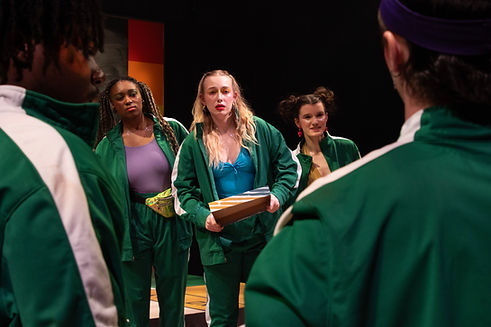
Rehearsals were an important part of the collaborative process because the show was devised and continued to grow through exploration in the room. During the first week of rehearsals, the director focused on ensemble building with the actors, creating trust, connection, and a shared sense of play that would support the devising process. I observed how the actors worked together and began learning the energy of the company. In the second week of rehearsals, I became more actively involved as devised scenes started to take shape. I watched the material being created and evaluated which sounds and music choices would best support each scene, considering tone, pacing, and character dynamics. During this time, my mentor also introduced me to Freesound, where I learned to source sound effects legally and professionally. I realized that many of the sounds I initially found on YouTube could not be downloaded or used effectively, so I began searching through Freesound and listening to a wide variety of audio clips to determine which sounds best matched the concept I was creating. In production meetings, the costume designer shared an 1980s-inspired visual direction for part of the show, and I wanted to collaborate across design areas by creating an 1980s-inspired sound cue for the party scene. This allowed the sound design to support the costume concept and helped create a unified atmosphere on stage. Because the actors also had to sing while listening to tracks, I often played music during rehearsal while carefully balancing the volume so they could hear the track clearly and still be heard singing. This required active listening, quick adjustments, and clear communication. Overall, the rehearsal process allowed the sound design to grow alongside the performance, making sound an active part of the creation of the piece.
Paper Tech
One of the most important parts of the process was paper tech, where the director, stage manager, and designers went through the show cue by cue to organize sound placements, transitions, and timing before entering technical rehearsals. Going into paper tech, I had prepared 77 sound cues, which gave the production a strong technical foundation. This experience taught me the importance of organization, communication, and how sound design works closely with every department to help create a smooth and successful production.
Tech Week
Tech week for the Spring 2026 production of Songs and Stories 2026 was the stage where all elements of the devised show came together. During this time, I worked closely with the director, stage manager, performers, and design team to integrate sound with lighting, costumes, props, scenic elements, and staging. My responsibilities included finalizing cue timing, balancing sound levels, and determining how cues would be distributed through the theatre’s four-speaker system for the best clarity and impact. We also held rehearsals where the actors sang with tracks, which required careful adjustment so both the performers and music could be heard clearly. Tech week taught me the importance of communication, flexibility, and attention to detail as the production moved from rehearsal into performance.

Dedication

Tracks
Show Week
Show week represented dedication through consistency, trust, and commitment to the production once it opened. My role shifted to working alongside the stage manager and sound board operator as we carried the sound design through each performance. After community preview, the sound cues were locked and could no longer be changed or added. Before opening night, I updated the curtain speech to the correct version for the show. I continued supporting the production team throughout the run, and the show opened successfully.

Show Sound Effects

Actors Archetypes/Sound Effects
Sample of Sounds
44335__ananth-pattabi__02-bamboo-flute-ananth-pattabi.flac
98010__reaktorplayer__crazy-beats-2.wav
172567__djgriffin__video-game-61-2.wav
180181__ecfike__slow-motion-music.wav
187982__zagi2__new-world-intro.wav
541766__skibkamusic__ha-music-hip-hop-12d-loop.wav
558270__kjartan_abel__blip-blop-tuesday.wav